- drsushant@gmail.com
- 088009 16525
- OPD: 06:00PM - 08:00PM
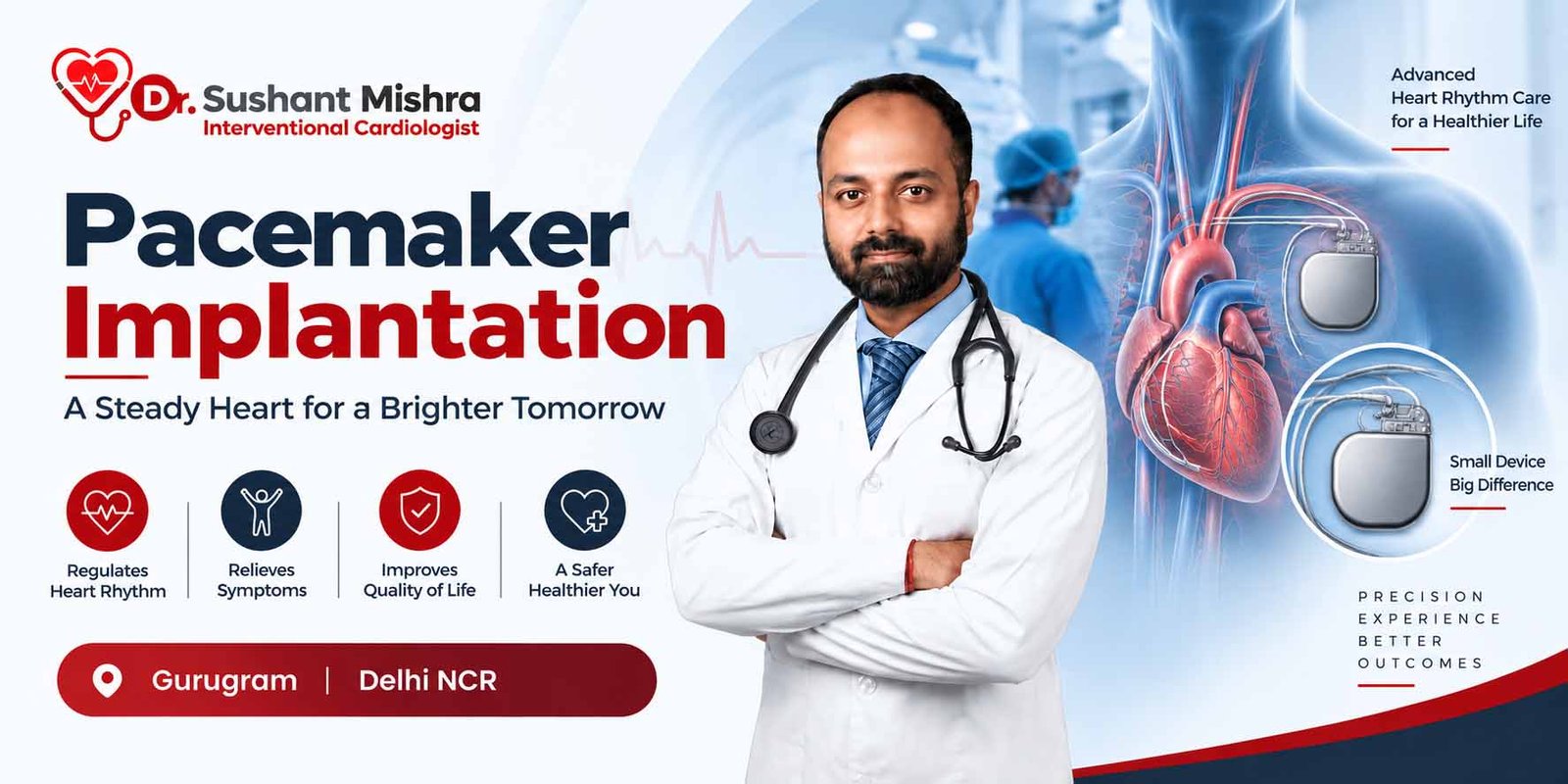
A pacemaker is a small electronic cardiac device used to help maintain an appropriate heart rate when the heart's natural electrical system is not working properly. It is usually implanted under the skin in the upper chest and connected to the heart through one or more leads.
Patients who have been advised pacemaker implantation in Gurugram can consult Dr. Sushant Mishra for evaluation, treatment planning and cardiac device care.
A pacemaker is a small, battery-powered device that monitors the heartbeat and sends electrical impulses when needed to help the heart maintain an appropriate rhythm.
The pacemaker generally consists of two main components: a pulse generator, which contains the battery and electronic circuitry, and one or more leads that connect the device to the heart.
Modern pacemakers are programmed according to the patient's specific heart rhythm and clinical requirements.
A pacemaker may be recommended when the heart beats too slowly or when there is a problem with the electrical signals that coordinate the heartbeat.
Common situations in which pacemaker therapy may be considered include:
The need for a pacemaker is determined after evaluating symptoms, ECG findings, rhythm monitoring and the patient's overall cardiac condition.
A slow or irregular heart rhythm does not always cause symptoms. When symptoms occur, patients may experience fatigue, dizziness, light-headedness, fainting, shortness of breath, reduced exercise tolerance or a sensation of an unusually slow heartbeat.
These symptoms can have many causes, so proper cardiac evaluation is important before deciding on pacemaker treatment.
A pacemaker continuously monitors the heart's electrical activity.
When the device detects that the heart rate has fallen below its programmed threshold, it can deliver small electrical impulses to stimulate the heart and maintain an appropriate rhythm.
Modern pacemakers operate only when required and can be individually programmed according to a patient's rhythm disorder and activity requirements.
Pacemaker implantation is generally performed in a cardiac procedure or electrophysiology laboratory.
A small incision is made in the upper chest. One or more pacing leads are passed through a vein and carefully positioned within the heart under imaging guidance. The leads are then connected to the pacemaker generator, which is usually placed beneath the skin.
The device is tested and programmed before the procedure is completed.
The exact technique and type of pacemaker depend on the patient's heart rhythm and clinical requirements.
Different pacemaker systems are available depending on the underlying rhythm problem.
Single-chamber pacemaker: Uses a lead to stimulate one chamber of the heart.
Dual-chamber pacemaker: Uses leads in both the atrium and ventricle to help coordinate cardiac rhythm.
Biventricular pacemaker / CRT: Used in selected patients with heart failure to help improve coordination between the ventricles.
The most appropriate device is selected after a detailed cardiac assessment.
A pacemaker and an AICD are both implantable cardiac devices, but they serve different primary purposes.
A pacemaker is mainly used to treat certain abnormally slow heart rhythms and conduction problems.
An AICD (Implantable Cardioverter Defibrillator) is primarily designed to detect and treat certain potentially life-threatening fast ventricular arrhythmias. Some AICD devices can also provide pacing functions.
The choice of device depends on the patient's diagnosis, heart function and risk of serious arrhythmias.
After implantation, the patient is monitored and the pacemaker is checked to ensure that it is functioning correctly.
Patients receive instructions regarding wound care, medicines, arm movement and physical activity. Regular follow-up is important so the cardiology team can check battery status, lead performance and device programming.
Patients should follow their treating doctor's recommendations regarding when they can return to work, exercise and other routine activities.
Many patients can return to regular daily activities after recovering from pacemaker implantation.
Patients should carry their pacemaker identification information and inform doctors and other healthcare professionals about the device before undergoing certain procedures or imaging tests.
Follow-up device checks remain important throughout the life of the pacemaker.
Pacemaker implantation is an established cardiac procedure. However, as with any invasive procedure, complications can occur.
Potential risks may include bleeding, bruising, infection, pneumothorax, blood-vessel injury, lead displacement or device-related problems.
The individual benefits and risks depend on the patient's health, rhythm disorder and other medical conditions and should be discussed before the procedure.
Patients experiencing symptoms related to a slow heartbeat or those who have already been advised pacemaker implantation can consult Dr. Sushant Mishra in Gurugram for detailed cardiac evaluation and treatment planning.
The decision to implant a pacemaker is based on the patient's symptoms, ECG and rhythm findings, conduction abnormalities, heart function and overall clinical condition.
If you have been diagnosed with heart block, symptomatic bradycardia or another cardiac conduction disorder, or have been advised to undergo pacemaker implantation, schedule a consultation with Dr. Sushant Mishra for individualized evaluation.
No. Pacemaker implantation is generally performed through a small incision in the upper chest and does not require opening the chest like conventional open-heart surgery.
Battery life varies depending on the type of pacemaker, its programming and how frequently pacing is required. Battery status is monitored during regular device checks.
Many patients can resume normal daily activities after recovery. Individual recommendations depend on the patient's underlying heart condition and overall health.
Most modern pacemakers are designed to tolerate everyday electronic devices when used appropriately. Patients should follow the device manufacturer's and cardiologist's recommendations regarding distance from strong magnets or electromagnetic sources.
A pacemaker does not cure coronary artery disease or other underlying heart conditions. Its purpose is to help manage specific abnormalities of the heart's electrical rhythm.
