- drsushant@gmail.com
- 088009 16525
- OPD: 06:00PM - 08:00PM
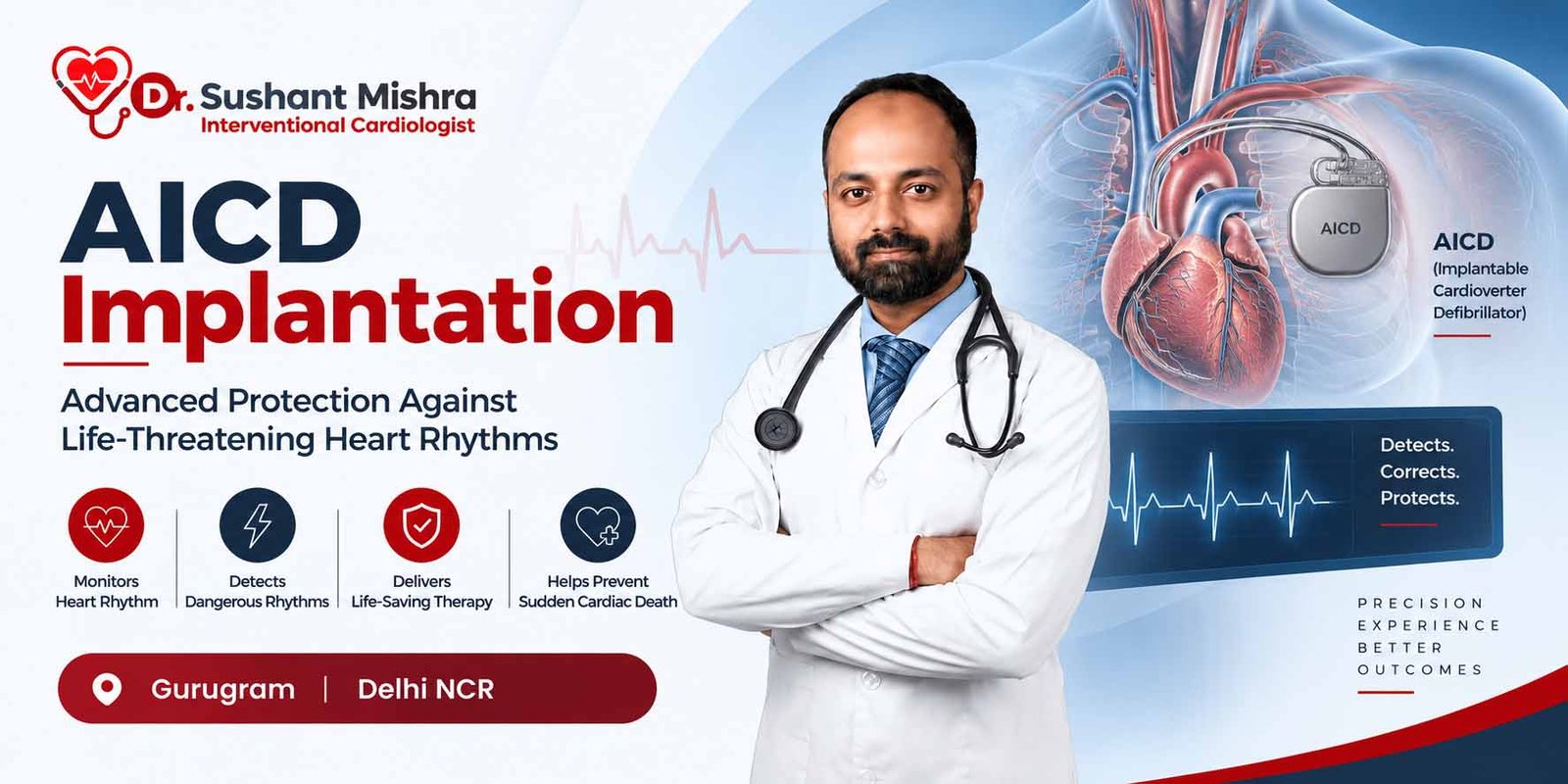
An AICD (Automatic Implantable Cardioverter Defibrillator), commonly called an ICD, is a small electronic cardiac device implanted under the skin, usually in the upper chest. It continuously monitors the heart rhythm and can deliver therapy when it detects certain dangerous, potentially life-threatening abnormal heart rhythms.
Patients who have been advised AICD implantation in Gurugram can consult Dr. Sushant Mishra, an Interventional Cardiologist experienced in advanced cardiac care and device-based therapies.
An AICD is similar in appearance to a pacemaker, but its primary role is different. While a pacemaker mainly helps manage certain slow heart rhythms, an AICD is designed to recognize and treat dangerous fast rhythms arising from the lower chambers of the heart, such as ventricular tachycardia (VT) and ventricular fibrillation (VF).
The device generally consists of a pulse generator and one or more leads. These components work together to continuously monitor the patient's heart rhythm.
The AICD continuously monitors electrical activity within the heart. If it detects a potentially dangerous ventricular rhythm, depending on the device programming and rhythm, it may provide:
Anti-tachycardia pacing (ATP): A series of carefully timed electrical impulses may be used to interrupt certain fast rhythms.
Cardioversion or defibrillation: If necessary, the device can deliver an electrical shock to help restore a more normal rhythm.
Many modern devices can also provide pacing support when clinically required.
AICD implantation may be considered for selected patients who have a significant risk of life-threatening ventricular arrhythmias or sudden cardiac death.
This can include some patients with:
Having one of these conditions does not automatically mean that an AICD is required. The decision is based on a detailed cardiac evaluation and established clinical criteria.
Dangerous ventricular arrhythmias can cause the heart to suddenly become unable to pump blood effectively.
An AICD is designed to detect certain life-threatening rhythms and provide appropriate electrical therapy when required. For appropriately selected high-risk patients, ICD therapy is an important part of preventing sudden cardiac death.
AICD implantation is generally performed in a cardiac procedure or electrophysiology laboratory.
A small incision is usually made in the upper chest. One or more leads are guided through a vein and positioned within the heart under imaging guidance. The leads are connected to the AICD generator, which is typically placed beneath the skin in the upper chest.
The device is then tested and programmed according to the patient's cardiac condition.
The exact technique can differ depending on the type of device and the patient's individual requirements.
Although the devices can look similar, their functions are not identical.
A pacemaker is primarily used to prevent the heart from beating too slowly in patients with certain rhythm or conduction disorders.
An AICD can provide pacing functions but is primarily designed to detect and treat potentially dangerous fast ventricular arrhythmias.
The appropriate device is selected according to the patient's rhythm disorder, heart function and overall cardiac condition.
After implantation, the medical team monitors the incision site and checks the device to ensure that it is functioning and programmed appropriately.
Patients receive individualized instructions regarding wound care, arm movement, physical activity, medicines and follow-up.
Regular device checks are important after implantation. These evaluations help assess battery status, lead function, stored rhythm information and any therapies delivered by the AICD.
Most patients can gradually return to many normal daily activities after recovery, based on their cardiologist's advice.
Patients should keep their device identification information available and inform healthcare professionals that they have an implanted cardiac device before certain medical procedures or imaging tests.
Specific advice regarding driving, exercise, electronic equipment and travel should be discussed with the treating cardiologist because restrictions can vary according to the patient's condition and whether the device has delivered therapy.
AICD implantation is an established cardiac procedure, but as with any invasive procedure, complications are possible.
Potential risks can include bleeding, bruising, infection, blood-vessel injury, pneumothorax, lead-related problems and inappropriate device therapies. Individual risks vary depending on the patient's health and clinical circumstances.
The potential benefits and risks should therefore be discussed before implantation.
Dr. Sushant Mishra provides evaluation and advanced cardiac care for patients with complex cardiovascular conditions. For patients who have been advised an ICD/AICD or are considered at increased risk of serious ventricular arrhythmias, a detailed evaluation can help determine whether device implantation is appropriate.
The decision is individualized according to heart function, rhythm history, underlying heart disease, previous cardiac events and other relevant investigations.
If you have been advised AICD implantation, have experienced a serious ventricular rhythm disorder, or need an opinion regarding an implantable cardiac device, you can consult Dr. Sushant Mishra in Gurugram for evaluation and treatment planning.
No. Although both are implanted cardiac devices, their primary purposes differ. A pacemaker mainly treats certain slow heart rhythms, while an AICD is designed to detect and treat potentially life-threatening ventricular arrhythmias.
No. The device is programmed to recognize specific abnormal rhythms. Depending on the rhythm, it may monitor it, provide anti-tachycardia pacing, or deliver a shock when clinically necessary.
Battery longevity varies according to the device, its programming and how frequently therapy is delivered. Battery status is checked during routine device follow-ups.
Many patients return to normal daily activities after recovery, but activity and driving recommendations depend on the underlying heart condition and device history.
No. An AICD does not prevent coronary artery blockages or heart attacks. Its main purpose is to detect and treat certain dangerous heart rhythms.
